Filed Under
Workhorses, Tandems, and Triumvirates: Reviewing the NHL's Goalie Landscape
ByGarrett Finlay
PublishedMay 7, 2026, 12:11 PM
Read Time4 MIN
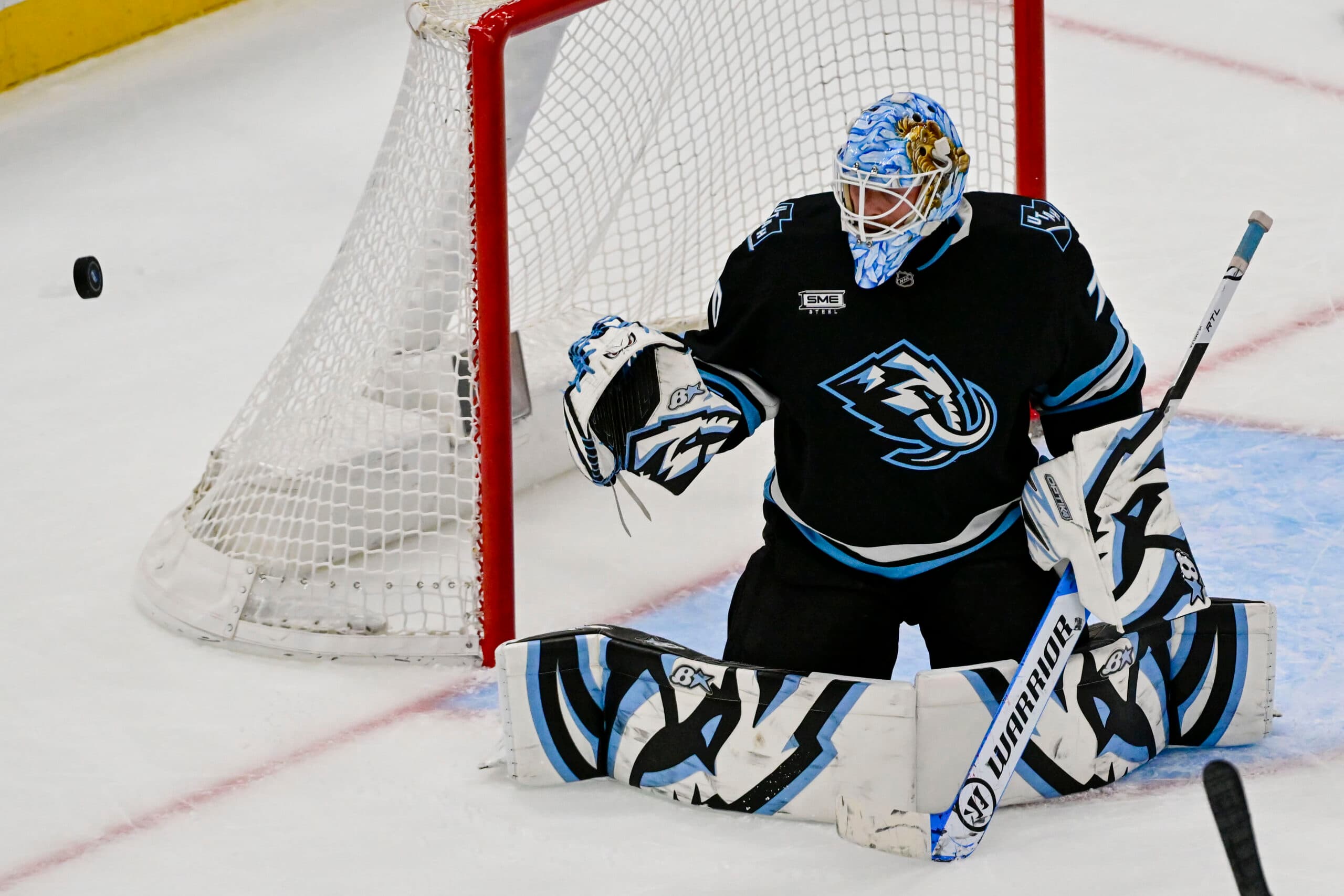
Hello there hockey fans! We are now in round 2 of the Stanley Cup Playoffs and could there be a change in how NHL teams are viewing goalies? Take a look at the teams that made it to round 2 and you will find nary a Vezina finalist amongst the lot. Further, it seems that outside of Anaheim, not a single team that advanced even has a clear cut #1 goalie on the roster, instead opting to simply lean into whichever goalie has the hot glove at any given time (which given these teams respective successes, no shade is being cast here).
I used to play fantasy football and I can see a parallel between goalies in the NHL and running backs in the NFL. For a couple of decades, the “workhorse” was the most sought after player in the game. Someone you could reliably hand the ball off to over and over again, all season long, allowing the team to generate sustained possession, while keeping the game simple, and the risks limited. This was a recipe for success in the NFL and in similar fashion, this trend related well to how the NHL utilized goalies in the 90’s and 2000’s, building a team from the goalie position out, following a recipe of simplicity and limiting mistakes on offense, focusing on structured defensive zone play and relying on the backbone, the goalie, to make the saves when needed and win games 2-1. But taking a look at teams around the NHL that still have workhorse goalies (and there are fewer and fewer every year), its becoming increasingly apparent that tandems and triumvirates are part of the new NHL’s recipe for success.
Let’s take a look at the games played for the goalies that have taken the majority of playoff starts for their teams and where they rank in the league for games played this past fantasy season:
- ANA Lukas Dostal - 56 GP (8th)
- PHI Dan Vladar - 52 GP (14th)
- COL Scott Wedgewood - 47 GP (25th)
- MTL Jakub Dobes - 43 GP (27th)
- BUF Alex Lyon - 36 GP (35th)
- MIN Jesper Wallstedt - 35 GP (38th)
- CAR Frederik Andersen - 35 GP (39th)
- VGK Carter Hart - 18 GP (67th)
Also worth noting is that none of these goalies, with the exception of Dostal, are making over 3.5 million AAV this season, freeing up valuable cap space for depth forwards, defenseman, and, of course, depth goalies.
Investigating further into goalies and games played, we can notice a few other trends. In 2025-26, 16 teams featured goalies that started more than 50 games. Of those 16 teams, only 6 were playoff teams, and of those 6 only Dostal and Vladar remain. If we look back at the last 10 years of 82 game NHL seasons (meaning that 2019-2021 will be excluded due to shortened seasons), then we can see another picture of this trend by comparing the number of goalies that played 60 or more games in a season. The following list shows the amount of goalies to hit the 60 game threshold, as well as the goalie that led the league in starts and the number of games they played that season:
- 2025-26: 1 (Karel Vejmelka 64)
- 2024-25: 5 (Hellebuyck/Vasilevskiy 63)
- 2023-24: 3 (Saros 64)
- 2022-23: 7 (Hellebuyck/Saros 64)
- 2021-22: 5 (Juuse Saros 67)
- 2018-19: 8 (Devan Dubnyk 67)
- 2017-18: 12 (Hellebuyck 67)
- 2016-17: 13 (Talbot 73)
- 2015-16: 10 (Quick 68)
- 2014-15: 12 (Holtby 73)
Now all of this is to show that workhorse goalies are becoming a rare breed, but what does that mean for fantasy hockey? Well, there are two ways to take this data:
The first way is to assume that workhorse goalies, due to their extreme rarity, combined with their reliability for volume (saves, wins, opportunities), should be valued higher than ever. Having one of the few goalies that plays 60 games, or even one of what is now only 12-18 goalies that starts 50 games, can give your fantasy team an advantage in points per player at the goalie position (or opportunity per player for category leagues). Having 2 goalies that combine for 114 games played, while most other managers in your league need 3 goalies to reach that same total, allows your team to carry an extra skater or defense player on your roster, further increasing your overall opportunities for points and/or category contributions.
There is another way to look at this information, though, and it seems to align itself very well with a trend that fantasy managers have likely heard of by now, the “Zero-G” strategy. Fantasy managers can now more easily circumvent the acquisition cost of quality workhorse goalies by taking a quantity based approach. Throughout the season, there was a “goalie flavor of the month” for nearly each month that could have brought your team greater success than a high cost workhorse. This season waiver wire darlings included Scott Wedgewood and Arturs Silovs early on, Brandon Bussi and Alex Lyon mid-season, and then Jakub Dobes and Joel Hofer down the stretch. We had a whopping 59 goalies post 10 or more quality starts in 2025-26!
So when the 2026-27 season rolls around, which way will you go? Should you spend big for steady volume at the goalie position or invest heftily on your skaters and pick up some freebie goalies off the wire? While it’s hard to believe (and perhaps even harder to predict), picking up Silovs in October, dropping him for Askarov in November, then subsequently dropping him for Bussi from December through the Olympic break, before finally settling on Hofer from March on - would have absolutely won you a fantasy championship this season. Of course, you could have, also, started your season by adding Charlie Lindgren, dropping him for Askarov in December, only to finally cut ties with him in March for Brandon Bussi to catch a cold streak that all but assured a last place finish in your leagues standings. Stop me if you’ve heard this before, but goalies are fantasy hockey’s most volatile position.
That’s all for this week, thanks for reading! My name is Garrett Finlay and you can follow me on X @garrett_fi51284 and on Bluesky @garrettfinlay.bsky.social where I am often talking goalies and fantasy hockey. I’ll be back here next Thursday, so until then - Happy Hockeying and good luck out there!